Climax Characters Based on True Stories
In 2005, Park Ji-man, son of former President Park Chung-hee, filed an injunction to halt the screening of director Im Sang-soo's film The President's Last Bang, claiming it defamed the deceased. The court decided to allow the film's screening after the deletion of three scenes deemed documentary in nature. However, the production company and Park Ji-man's side filed separate lawsuits, one appealing the injunction decision and the other seeking to ban the film and claim damages, leading to a three-year legal battle. In the first trial, the court rescinded the injunction but ordered the production company to pay 100 million won in defamation damages. Four film organizations criticized this as judicial censorship and a political ruling. In the second trial, an appeal led to a settlement where the film was to include the "This film is based on imagination inspired by a historical event. Most details and character portrayals are fictional" subtitle at the beginning, Park Ji-man was to return the 100 million won provisional payment from the first trial, and the production company was to issue an official press release expressing regret for any hurt caused by the film's content.
Director Choo Chang-min's The Land of Happiness showcases the societal atmosphere shift after The President's Last Bang and the diversification of how Korean commercial films approach the October 26th incident. Following the Park Geun-hye administration's "state affairs manipulation," evaluations of the Park Chung-hee era and its legacy have changed. Furthermore, with the popular success of films dealing with the May 18th Democratization Movement, perspectives on the Chun Doo-hwan era have also broadened. While conservative groups resist, the censorship of film content in courts, as seen in the past, has disappeared. Historical reenactment films like The King of the Prison avoid legal disputes by using altered names for real figures and characters, while still reinterpreting the atmosphere of their respective eras. The King of the Prison reenacts the relationship between Park Chung-hee and Kim Jae-gyu in a French noir style, and 12.12: The Day uses a fictional hero, Lee Tae-shin, to console a failed history and expose a power group.
광고 영역
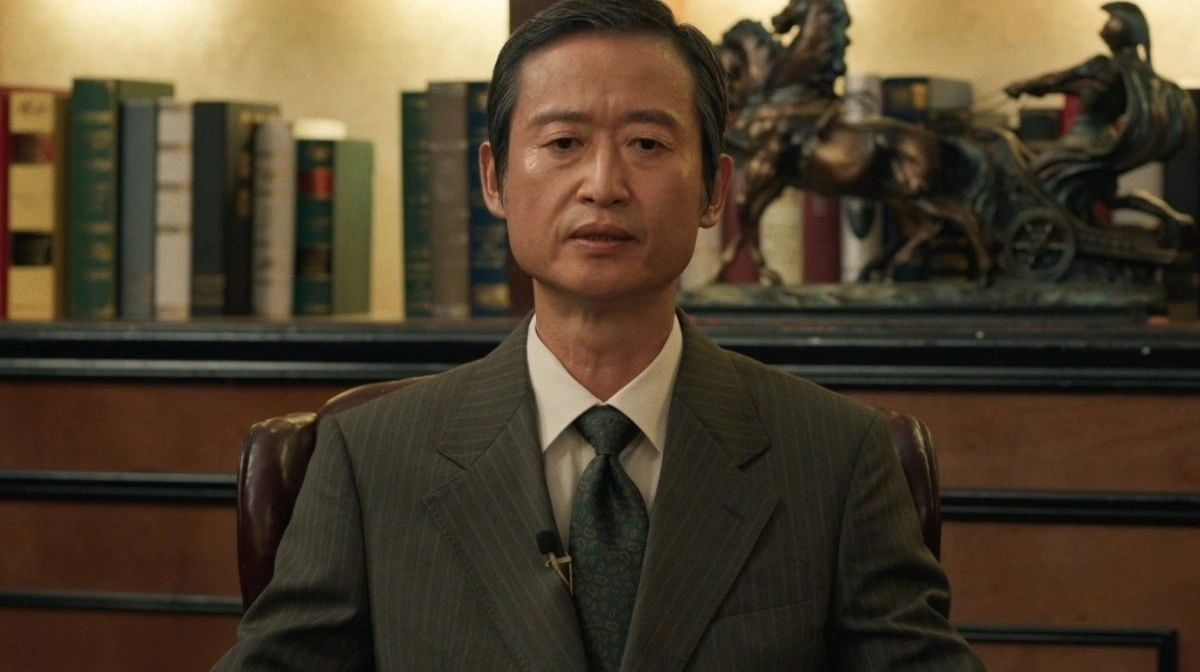
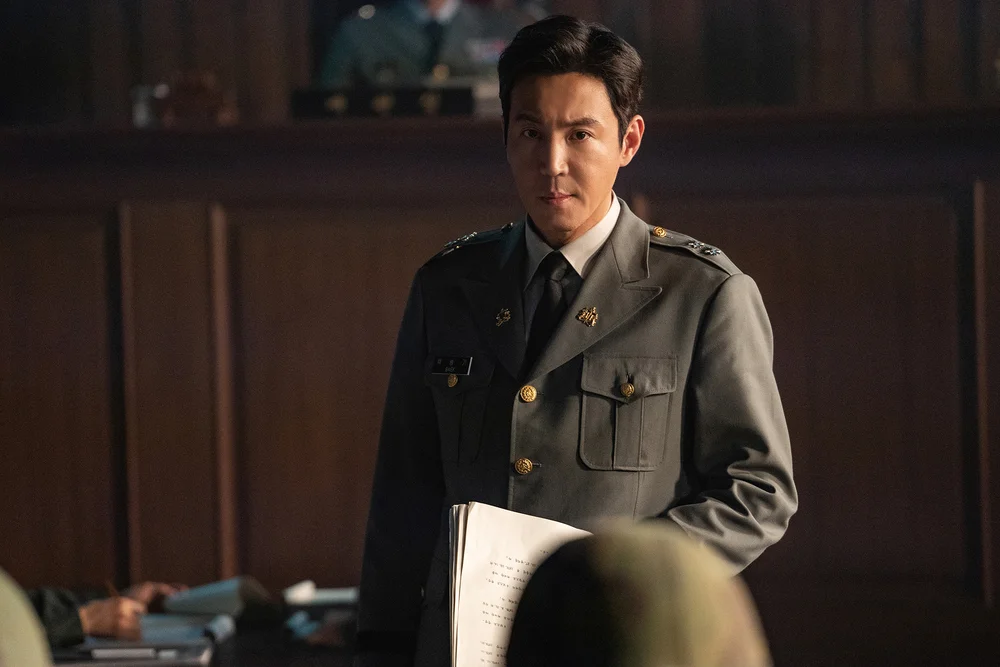
The Land of Happiness begins with the presidential assassination on October 26, 1979, and culminates with the military coup on December 12th. The protagonist of this film is not the Director of the Korean Central Intelligence Agency, Kim Young-il, but his aide, Park Tae-joo, with a significant portion of the runtime dedicated to trial scenes. As Park Tae-joo was the only active military officer among those involved in the incident at the time, a single-instance trial was applied according to military court-martial law. Lawyer Jung In-hoo, eager for fame, becomes Park Tae-joo's legal representative and attempts to avoid a military trial by arguing for a general trial, but Park Tae-joo refuses, stating that soldiers must adhere to military law. Jung In-hoo argues for the unconstitutionality of the single-instance trial in court but is warned. Later, Park Tae-joo pleads that he was unaware of the presidential assassination, but his plea is dismissed by the prosecutor's rebuttal. Ultimately, Park Tae-joo himself admits that he knew Kim Young-il's words implied the assassination of the president.
※ 이 포스팅은 쿠팡 파트너스 활동의 일환으로 수수료를 제공받습니다.
The most intriguing part of the film is the imaginative depiction of the "Army Headquarters or Intelligence Agency?" episode as evidence that could alter the trial's outcome. Jung In-hoo emphasizes Park Tae-joo's choice to go to Army Headquarters instead of the KCIA, arguing it was a personal deviation unrelated to conspiracy. The attempt to bring Army Chief of Staff Jung Jin-hoo to court to support this claim is fictional. It is a creative idea to adapt an anecdote that changed the fate of Kim Jae-gyu, Chun Doo-hwan, and Korean political history, centering it on the least known figure present at the time, turning it into material for a legal drama.
Given the nature of historical reenactment films, the ending is already known. All defendants, including Kim Jae-gyu, were executed, and Colonel Park Heung-joo, a real person, was sentenced to death after a hasty trial. The film emphasizes that lawyer Jung In-hoo's greatest anger was not about winning or losing the trial but the disregard for human life, hinting at the events that would unfold in Gwangju a few months later. The Land of Happiness denounces how the judicial system was manipulated by political forces and violated the dignity of life, using legal logic and the conventions of the legal drama genre. While The President's Last Bang became a black comedy due to external legal controversies, The Land of Happiness internally incorporates the absurdities of the judicial system. This distinguishes it from previous methods of historical reconstruction and presents another methodology for Korean commercial films to deal with the history of failure. Although not flawless in every aspect, The Land of Happiness demonstrates the importance of narrative and genre exploration necessary for popular cinema, especially now when historical films have become attractive items in Chungmuro.